
PahinaHinahon
Keynote by Irene Sarmiento | 21 July 2026 | Museo Pambata
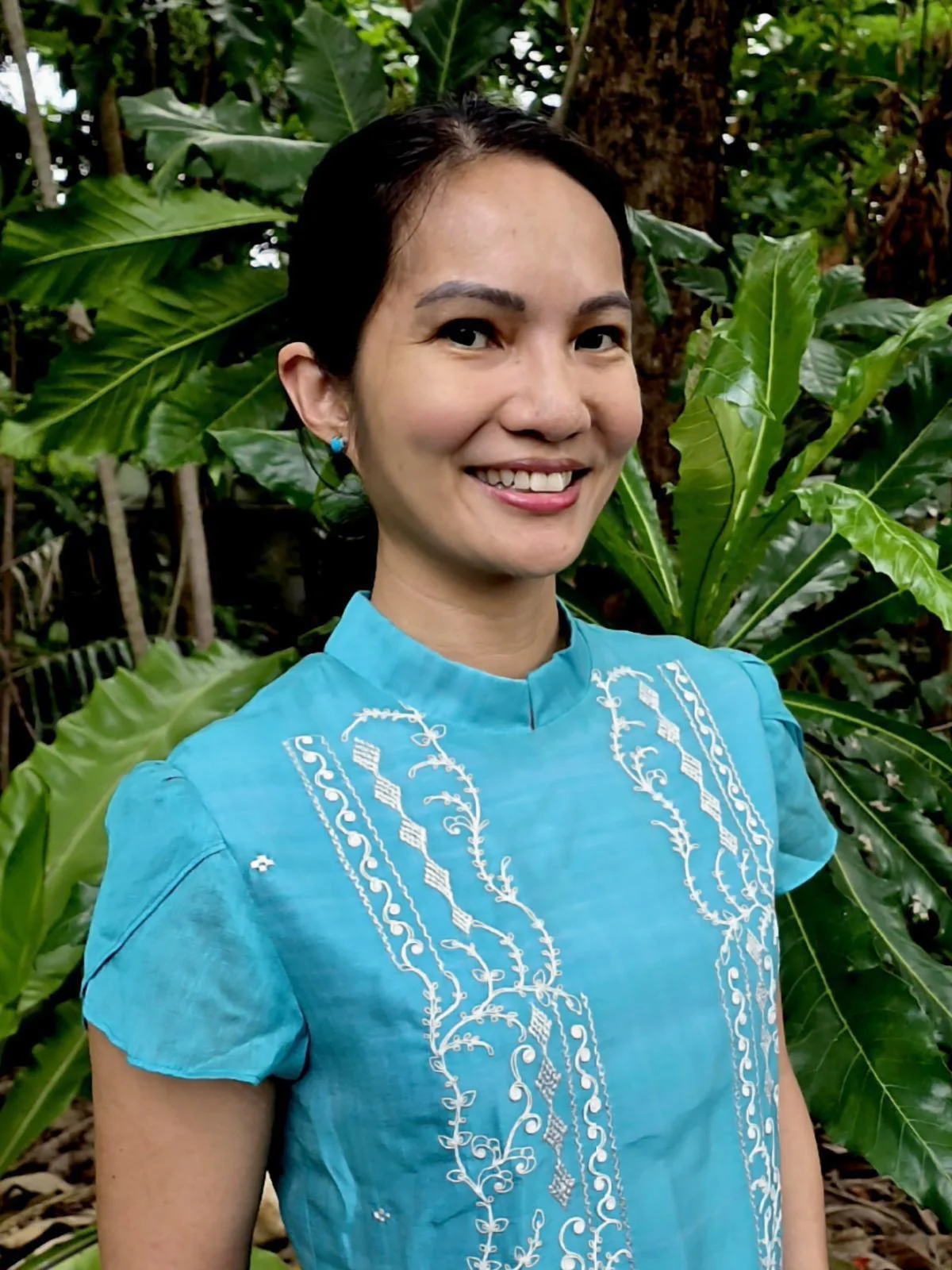
Once upon a time, in Quezon City, there was a little girl who loved to read stories about distant lands, mystical beings, and enchanted castles. In all those heroic tales, there was a special character who stood out to her, one who she dreamed she would one day become—
A bard.
Spoiler alert, that little girl was me.
It broke my heart back then to learn that bards weren’t really a thing anymore, so I had to settle for my next closest bet to being a bard—
A writer.
Hi! I’m Irene. I have three books for young people. Spinning is about a boy with autism. Tabon Girl teaches kids about Philippine prehistory and challenging gender norms. My young adult magic realist novel, Stray Cats, tackles child trafficking through Filipino folklore.
But my most critically acclaimed story was one I wrote at 9. “My Little Sister and I” won the first Young Minds story writing competition.
Here’s what Neni Sta. Romana Cruz had to say about it:
Even if one wanted to, one could not rewrite it to make it better. It is a simple and charming story of the fun that two sisters have together. […] The best thing about it is that the child’s voice was heard throughout the story.
What was Irene Sarmiento’s writing secret?
She did not pretend to be anyone else but herself and she wrote from the heart.
When people talk about peaking early, they usually don’t mean in 3rd grade for a piece riddled with spelling and punctuation errors. But so far, this is the best review I’ve had for any of my works, and it’s also from one of the most prominent Filipino writers.
The Neni Sta. Romana Cruz. Please lang.
Though my writing style has evolved over the years—I now know how to spell picnic and believe—my secret has remained the same:
I speak in my own voice. I don’t pretend to be anyone else.
Circling back to the story about the little girl who wanted to be a bard, I eventually participated in the real world—I became an occupational therapist in 2005, taught at UP, worked in local clinics, got married, migrated to the States in 2011, practiced OT there, got married again, and obtained a Master’s in Applied Cognition and Neuroscience. I ticked all those boxes, all the while writing nights and weekends, and submitting my work to publishers and agents all over.
I finally published my first novel Stray Cats with Ateneo University Press in 2023. Since I was living in Colorado at the time, when I’d talk about Stray Cats to Americans, their immediate reaction was usually, “So it’s for Filipino children.”
And I would answer, “It’s for all children,” believing that what affects children in one part of the world should affect all children.
The reason I wrote Stray Cats in the first place was because when I was about 7 or 8, I played with a neighbor named Dada, who was a couple of years younger than me. When Dada stopped coming to my house, I found out that her father had “sold” her.
I looked for answers, but was told, “That’s just how things are here.”
Writing a novel about Elisa, who goes on a dark adventure searching for her lost friend, Raquel, was my own way of searching for my lost friend, Dada. I wanted readers to reach the conclusion that finding the lost children of the world isn’t up to one person, but all of us.
Despite how niche my YA magic realist novel might seem, Stray Cats found an international audience. In 2025, I became first Filipino author at the White Ravens Festival, which is held in Germany and celebrates excellence in children’s and youth literature.
White Ravens and its annual list of books are part of the International Youth Library’s initiatives to develop international understanding through children’s books. Jella Lepman, the founder of the library, assisted with cultural reformation after World War II. Back then, German children had only been exposed to Nazi propaganda literature.
Lepman’s vision was to bring in children’s picture books from around the world because, “If one is to believe in peaceful coexistence, the first messengers of that peace will be children’s books.”
This fairytale gets better.
The International Youth Library is in an actual castle in Munich. They call it “The Book Castle.” Like a true medieval bard, I got to read Stray Cats and talk about my Filipino heritage to hundreds of children in a castle. Most German pupils I encountered, who ranged from 6th to 8th grade, had not heard of the Philippines. My presence at the festival literally put our country on the map for them.
Even though the themes and settings in Stray Cats were so foreign to them, these kids responded with empathy and critical thinking. In these moments, I truly saw children’s books as messengers of peace.
The honor reinforced my belief in the political power of children’s books—that’s why people keep freaking out over them! That’s why they get banned.
Because I was so grateful that I fulfilled my dream of being a bard, I thought, “Wouldn’t it be amazing if I could do the same thing in my beloved Philippines?”
I was heartened to the point that I resigned from my well-paying job as a pediatric OT in the U.S. so I could focus on my writing and come back to read at schools, mainly in the Metro Manila area.
After a reading at a Catholic school, a boy approached me and told me about how he could relate to Elisa, the 8th grade heroine of Stray Cats.
“I really like Elisa,” he gushed. “She’s so flawed and she has a dysfunctional family.”
Another reader said it stood out to her that Elisa questioned her religion. A teacher cited that some kids could also identify with Elisa’s having to take medication for depression, which for something they say is as common as the common cold, is still largely stigmatized as “nagi-inarte.” My novel’s message of peace for these Filipino kids was that they were not alone.
Then my fairytale buzz started to fizzle out.
In the one public school I visited, I asked the 6th graders about which issues in society were important to them, and what they could do to help. I ask this same question in private schools, but the contrast between their answers was staggering, as private school children tend to talk about societal problems as distant from their lived realities.
These issues hit closer to home for kids in public schools. One student was concerned about child suicide, and how kids shouldn’t be pressured beyond their limits. Another cited rising gas prices as troubling. She said she could help her family save money by walking to school instead of taking public transportation.
I felt my heart sink. It was a reminder of how from the onset, most Filipino children learn implicitly to settle for less and bear the brunt of all these complex problems that aren't even their fault.
I thought, these interactive reading events are nice things, and Filipino children deserve nice things. But with our national reading levels so dismally low, am I even making a difference?
What message of peace can children’s books bring when the children who’d benefit the most don’t even have access to them?
We observe that many of these barriers start in childhood and come from external, rather than internal factors. I am here, doing what I’m doing, because I believe the narratives we expose our children to matter. The stories we tell our children can determine what dreams they will dream.
Still, consistent with PahinaHinahon, I also needed a meaningful break from my self-imposed mission of sharing what I could with my one novel. But then the illustrious Ani Almario invited me to give this keynote, so right as I put my own book down, I set out to find what other Filipino children’s books had to say about finding rest in chaos.
Moral Stories
Let’s start with a couple of folk stories for children.
Rosamistica is about a young orphan who, instead of spending her money on a toy or food for herself, gives it to a mother and infant begging on the street.
In Kung Bakit Maliit Ang Palay, Nonoy is frustrated while harvesting rice grains, which used to be gigantic. He bashes a large granule to the point that this splits into tiny pieces, or rice as we know it today.
And who can forget Alamat ng Pinya? Here, Pinang would rather play outside than help her mother at home. When Pinang overlooks things in the house, her mother curses her to have hundreds of eyes, and the child is transformed into a pineapple.
What our folktales have in common is that they come with this moral lesson—if children are self-sacrificing and virtuous, they are rewarded; if children are disobedient and lazy, they are punished.
We know now that that’s not the world we live in. Our modern children’s books don’t shy away from the truth.
Children and Poverty
The classic May Darating na Trak Bukas lyrically narrates how a child living on a garbage dump tries to make the most of his terrible state. But his imagination can only go so far in assuaging his hunger and misery.
Nemo, ang Batang Papel is about boy made of paper who wishes he could become a real boy. He gets his wish when he wakes up in the slums and is forced to work on the streets.
These are exemplars of how Filipino children's books can shed light on the dark situations that real children face. But what can we do?
Modern Filipino Children’s Books and PahinaHinahon
Knowing the unique challenges confronting our Filipino kids, I’ve selected a short and admittedly incomplete list of Filipino children’s books revealing PahinaHinahon.
These works show that most often, chaos is out of a child’s control. What these messengers of peace have to say is consistent with both science and morality:
We as adults must give children respite. Give.
Respite from chaos should not be earned, or learned, or fought for.
It is not the responsibility of children to create a safe and loving environment—it’s that of adults, and these books are perfect messengers of PahinaHinahon.
Quiet in the Storm
In a country that experiences about 20 typhoons a year, sometimes the only thing parents can do is give comfort in the storm. Yakap na Mahigpit is how a father responds to his son’s fear. This tenderness and security gives children strength to eventually comfort others.
Disability and Access to Health
A sense of not belonging can also arise from something inherent to the child, like having a disability or special needs. Pitong Tsinelas sends a message of inclusion through numbers and pictures. Regardless of what kind of slippers they have on, all children have the right to play.
Rest and play go hand in hand with access to care. Little Lyka, a child living in a remote mountain village, gets injured in Duyan Pababa sa Bayan. The grownups rush to her aid and carry her in a hammock to the town. On the arduous journey, Lyka daydreams and wishes that the hospital was closer to them. She decides that one day she’s going to be a doctor and serve her people.
Trauma and Healing
Some wounds are deeper and take more grown-up intervention to heal. In Ang Misteryo ng Patong-patong na Damit ni Hulyan, Tintin notices a sudden change in her favorite cousin Hulyan’s behavior. The once playful and outgoing boy becomes sullen, afraid, and has taken to layering his clothes despite the heat. Tintin’s parents seek the help of a child psychologist, and the trusted adults learn about Hulyan’s trauma. With patience and love, the little boy starts to mend, layer by layer.
Grief
Children confront loss in Ang Mga Lambing ni Lolo Ding and Ang Tahanang Hindi Tumatahan.
The former shares a child’s memories of the sweet reminders left behind by his beloved grandfather, as love and wisdom transcend death and sorrow.
In the second example, siblings witness their house weeping, while their mother copes with separation from their father.
These books also cite how the extended family is a source of respite in our Filipino culture. Ultimately, our loved ones live on in our hearts, grief is temporary, and there are better days ahead.
Everyday Chaos and Everyday Labor
As for finding peace throughout the daily challenges, our newer Filipino stories have caregivers who get children to observe and follow good examples, without turning them into pineapples.
In Papel de Liha, a daughter sees all her mother does around the home to keep life in order. The child overhears her Tita compare her mom’s constantly toiling hands to sandpaper. Yet, to the daughter, these are the softest hands she has ever felt.
A little girl likens her family's domestic helper to a magician in Chenelyn! Chenelyn!. But when Chenelyn gets sick, the family works together to nurse her back to health, concluding that they should all share Chenelyn’s load.
Non-conventional Filipino Families
A book that tackles what it’s like to live in a Filipino family that exists but is rarely represented is Ang Ikaklit sa Aming Hardin, about a little girl raised by two moms. Though the protagonist gets taunted at school for being fatherless, her nanays share an important lesson: As it is with growing a sunflower, the gender of who plants and tends to the seed doesn’t matter. The flower will grow if its needs are being fully met.
Chaos, Conflict, and Cats
And what about forces that are not just chaotic, but also sobrang cute?
Words cannot—and do not—describe the hero’s journey in the wordless book Pibo, in which a cat is initially a source of fear but turns out to be a friend, thus safely satisfying a child’s need for adventure.
Ang Pusang Kartero shows how children are affected by grown-up conflict and economic division, as a feud between fathers prevents two neighbor boys from visiting one another. In the end, the tatays realize that they both want the same thing—what is best for their children. And their peace envoy comes in the form of a chonky-chonk cat.
Imprisonment and Hope
Lastly, there is the historical chaos that flows in the veins of every Filipino. Isang Harding Papel talks about three generations taking care of one another in an era of oppression. This book follows young Jenny’s visits with her mother—a political prisoner during Martial Law. It depicts the superficial and fleeting “peace and order” that come at a human cost.
The mother chooses truth over the easy answers presented by the Strong Man rhetoric of her day, and for that, she is incarcerated and separated from her daughter. Hope and freedom eventually prevail. One message is that even if you are on the losing side today, things can very well change tomorrow.
Conclusion
There you have it. Filipino children’s books that show PahinaHinahon given by adult hoomans and adult cats.
To wrap things up, I’m sharing a famous quote by American writer and civil rights activist, James Baldwin:
“The children are always ours, every single one of them, all over the globe; and I am beginning to suspect that whoever is incapable of recognizing this may be incapable of morality.”
As an author, therapist, and advocate for children, I tend to take on heavy issues that leave me feeling angry and sad.
And that is totally fine.
Because I believe it’s the grown-ups who should carry the burden of anger and sadness in this world, precisely so that our children—every single one of them, all over the globe—don’t have to. They can just play, and learn, and read, and rest.
Irene Sarmiento is an award-winning Filipino author of children’s and young adult literature and the first Filipino writer invited to the prestigious White Ravens Festival in Munich, Germany. She is the author of the acclaimed YA novel Stray Cats (Ateneo de Manila University Press), a Kids’ Choice winner at the 8th National Children’s Book Awards, and the award-winning picture book Tabon Girl. Her stories have received recognition from the Palanca Memorial Awards, Philippines Free Press, Philippine Graphic/Fiction Awards, and Stories to Change the World. An occupational therapist and former Overseas Filipino Worker (OFW), she also writes essays for Rappler on migration, race, and healthcare.
